How to Plan an Edible Oil Processing Line: Equipment Configuration from Pretreatment to Refining & Packaging
Learn how to plan an edible oil processing line—from raw material pretreatment and pressing/solvent extraction to crude oil treatment, refining and finished-oil packaging. This guide by Qi'e Grain and Oil Machinery Co., Ltd. helps overseas oil mills evaluate equipment configuration, capacity matching, automation and environmental requirements when selecting a long-term machinery partner.
Planning an edible oil processing line is not only about choosing individual machines—it is about building a stable, scalable workflow from pretreatment → pressing/solvent extraction → crude oil treatment → refining → packaging, aligned with your target capacity, automation expectations, and environmental requirements.
This page is a practical planning guide from Qi'e Grain and Oil Machinery Co., Ltd. (企鹅集团), a B2B manufacturer of oil pressing equipment, oil production line equipment, and edible oil refining equipment, serving overseas oil mills and investors in Asia, Africa, and South America.
1) Define the project baseline before selecting equipment
Raw material & process route
- Oilseed type and quality range (e.g., soybean, sunflower seed, palm kernel, corn germ)
- Preferred route: pressing, solvent extraction, or combined
- Target oil characteristics (crude oil treatment needs, refining depth, odor/color targets)
Capacity & operating assumptions
- Daily/annual throughput and expected working hours
- Labor availability and desired automation level
- Utilities boundary: steam/thermal oil, electricity, water, compressed air
A reliable
oil mill project planning starts with a clear baseline. It helps prevent capacity mismatch across sections (e.g., pretreatment feeding faster than extraction, or refining bottlenecking packaging).
2) End-to-end workflow and what each section should achieve
| Section |
Planning focus |
Typical equipment scope |
| Pretreatment |
Stabilize feed quality and prepare material for efficient oil release; reduce downstream load and improve overall process stability. |
Oilseed pretreatment equipment (cleaning, conditioning, sizing/flaking where applicable) |
| Pressing / Extraction |
Choose pressing vs solvent extraction based on material characteristics, capacity, and operational preferences; design for stable output. |
Oil pressing equipment and/or solvent extraction units, plus conveying and control system |
| Crude oil treatment |
Remove impurities and stabilize crude oil to ensure refining efficiency and consistent product quality. |
Settling/filtration and supporting tanks/pumps (configured per crude oil condition) |
| Refining |
Match refining depth to your market positioning and regulatory targets; plan for energy use and operating simplicity. |
Edible oil refining equipment (complete set, tailored to required refining steps) |
| Packaging |
Design for finished-oil handling, packaging formats, and throughput balance; ensure cleanliness and smooth logistics. |
Filling/packaging line, finished-oil storage and transfer (scope depends on packaging plan) |
Capacity matching: size each section to avoid bottlenecks and idle time across the line.
Automation: select control depth that fits local labor skills, maintenance capacity, and uptime expectations.
Environment & safety: plan exhaust, wastewater interfaces, and plant layout compliance early—before procurement.
3) Configuration checklist for overseas oil mills & investors
- Process flexibility: can the line adapt to raw material variation and future product planning?
- Energy and operating cost: evaluate energy-saving design and utility consumption boundaries during planning.
- Quality control points: ensure clear checkpoints from pretreatment through refining to keep finished-oil quality stable.
- Maintenance practicality: prioritize accessibility, standardized parts where feasible, and clear maintenance procedures.
- Modular installation: helpful for faster installation, commissioning, and phased expansion.
- Supplier capability: confirm engineering support, installation guidance, and long-term service availability.
4) Reference configuration: Corn Germ Oil Production Line (energy-efficient & modular)
When assessing complete edible oil plant configurations, Qi'e Grain and Oil Machinery Co., Ltd. provides a corn germ oil production line designed around practical project needs:
- High-efficiency production: modern process design with automation control for stable throughput.
- Energy-saving and environmentally considerate: line design focuses on lowering energy consumption and operating cost.
- Quality-oriented processing: rigorous process flow and quality control help support consistent oil quality.
- Adjustable process setup: configurable units allow adaptation to different customer requirements.
- Easy operation and maintenance: human-centered design supports operator training and routine upkeep.
- Modular structure: simplifies installation, operation, and maintenance, and can reduce labor and material burden during setup.
This modular, energy-efficient approach is suitable for both established oil mills and new projects that need a scalable path from startup to expansion—without overcomplicating daily operation.
Planning notes for corn germ oil
- Confirm raw material supply stability and incoming quality range.
- Choose pressing/extraction route to match capacity and operating preference.
- Define refining target (market requirement) before finalizing refining equipment scope.
- Reserve space for utilities, storage, and packaging logistics.

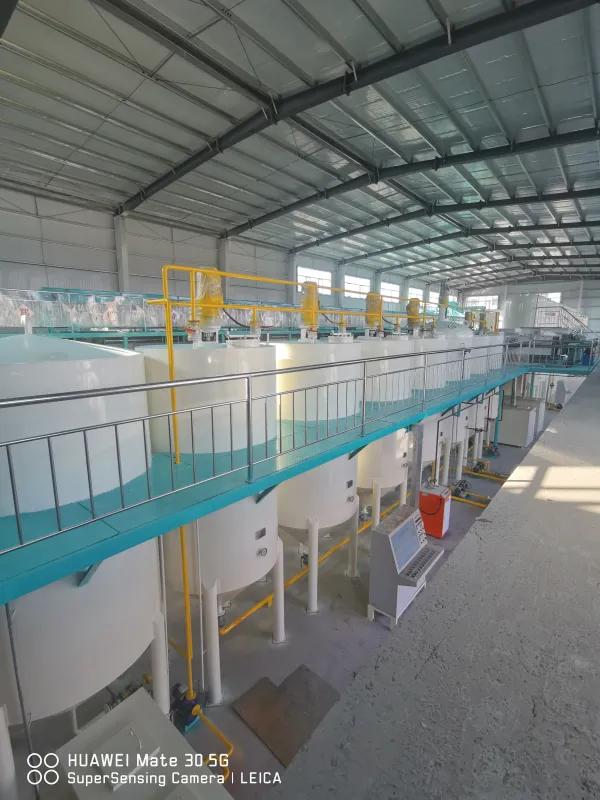
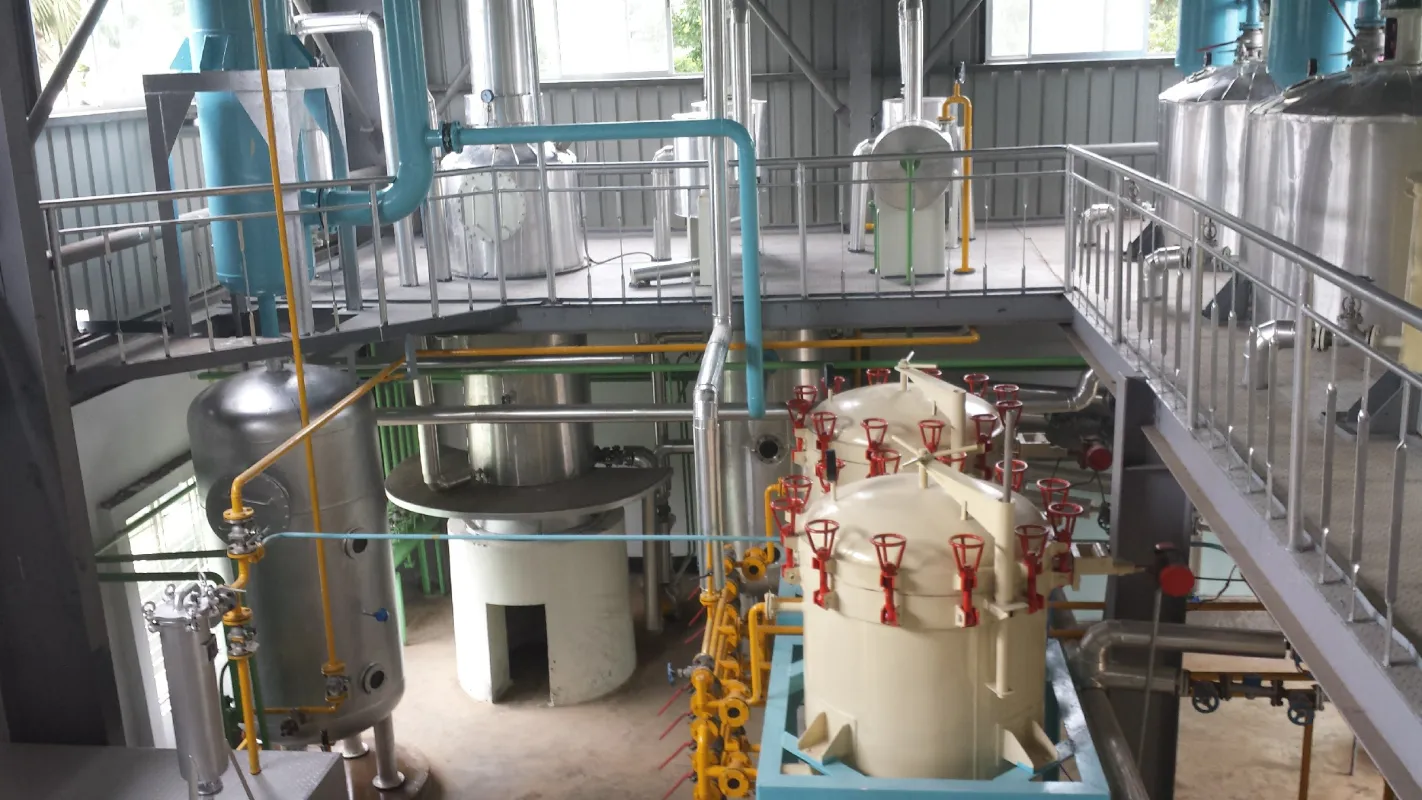
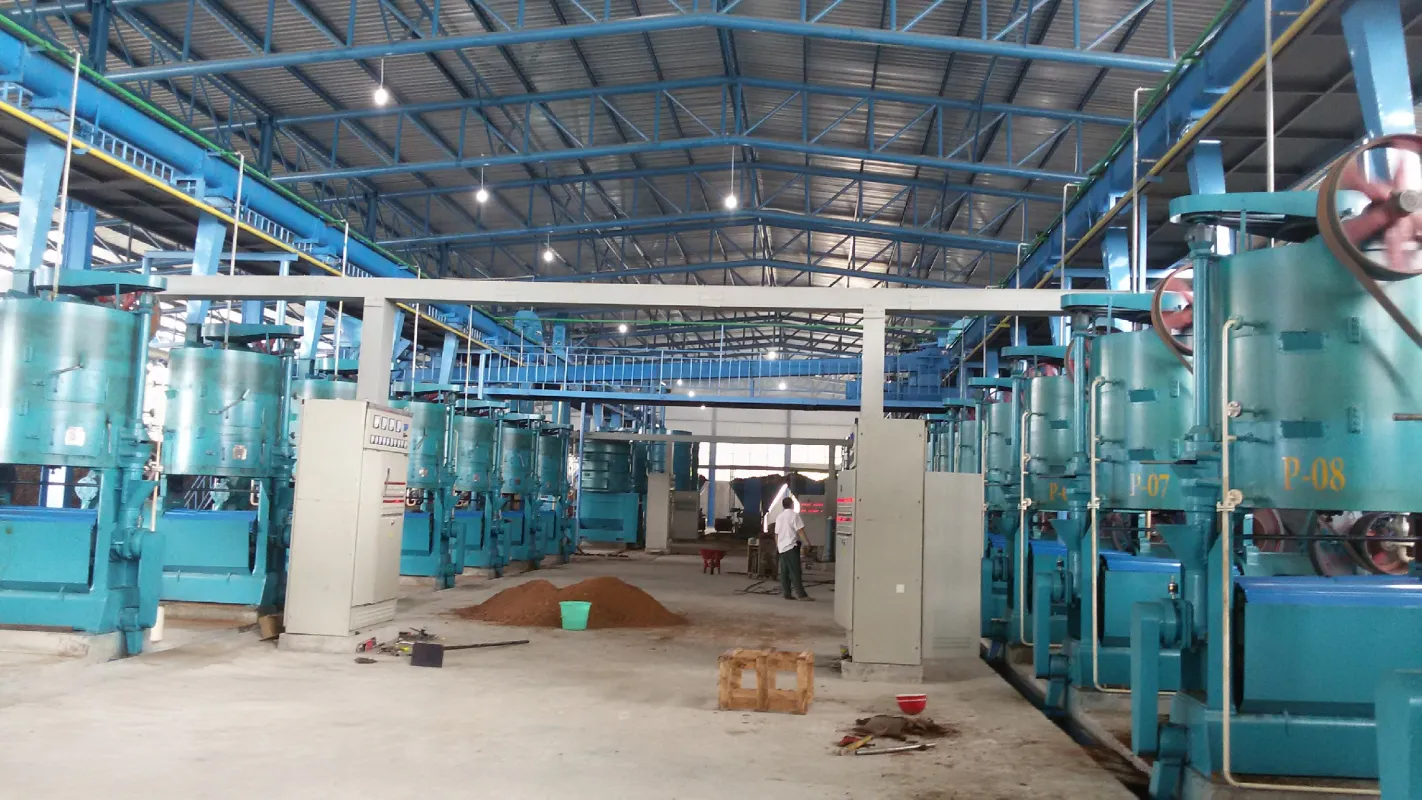
Image: corn germ oil line reference—useful when evaluating equipment configuration from pretreatment to refining and packaging.
5) How we support planning and long-term execution
As a machinery partner, Qi'e Grain and Oil Machinery Co., Ltd. supports customers with a practical approach to equipment configuration and project delivery—covering design, installation guidance, and technical service for edible oil processing lines.
Engineering clarity
- Section-by-section scope definition and interface planning
- Capacity alignment across pretreatment, extraction, refining, and packaging
- Layout and installation considerations for efficient operation
Operational readiness
- Operator-friendly design to support training and daily maintenance
- Automation selection aligned with local conditions
- Support for stable commissioning and ongoing production
Talk to us about your edible oil plant configuration
If you are evaluating an edible oil processing line for soybean, sunflower seed, palm kernel, or corn germ, share your target capacity, raw material profile, and finished-oil packaging plan. We can help you structure an end-to-end configuration from pretreatment to refining and packaging—focused on practicality, maintainability, and long-term operation.
Scope: pretreatment → pressing/extraction → crude oil treatment → refining → packaging
Reference: corn germ oil production line (energy-efficient, modular)
Supplier: Qi'e Grain and Oil Machinery Co., Ltd.