How to Choose Edible Oil Production Line Equipment: From Raw Material to Capacity Configuration
Qi'e Grain and Oil Machinery provides an evaluation guide for selecting edible oil production line equipment—covering raw material characteristics, pretreatment, pressing vs. solvent extraction, refining depth, target capacity, automation, and environmental compliance—supporting project planning for corn germ oil production lines and other edible oils.

Selecting edible oil production line equipment is not only about comparing machines—it is a capacity-and-process decision that must match your raw material, product positioning, automation expectations, and environmental compliance plan.
This page provides a practical selection framework from raw material characteristics → pretreatment → pressing vs. solvent extraction → refining depth → target capacity → automation & EHS, with special reference to corn germ oil production lines and other edible oils. The guidance is prepared by Qi'e Grain and Oil Machinery Co., Ltd. (Penguin Group), a B2B manufacturer and project service provider for oil pressing equipment, extraction systems, and edible oil refining equipment.
1) Start with the Raw Material: What You Process Determines What You Buy
Key raw material questions (used for equipment sizing)
- Type & condition: corn germ, soybean, sunflower seed, palm kernel, etc.; moisture and impurity levels.
- Oil-bearing behavior: how easily oil releases under pressing; whether extraction is needed for higher recovery.
- Quality target: nutritional retention needs and the intended market positioning for the finished edible oil.
- Supply stability: seasonal variation, storage time, and consistency—these affect pretreatment and control requirements.
For corn germ oil projects: stable process control and careful pretreatment are commonly prioritized to support both energy efficiency and nutritional retention. Equipment selection should therefore consider controllability, automation readiness, and a process layout that minimizes unnecessary heat exposure.
2) Pretreatment Module: The Foundation for Stable Output and Quality
Pretreatment is where many production issues are solved (or created). The pretreatment configuration should match your raw material properties and your main oil-making route (pressing or solvent extraction).
| Pretreatment step |
Purpose |
Selection considerations |
| Cleaning & impurity removal |
Protect downstream equipment; improve process stability |
Raw material impurity profile; desired uptime and maintenance intervals |
| Conditioning / moisture & temperature control |
Prepare material for efficient oil release |
Energy-saving design; controls and sensors for repeatability |
| Size reduction / flaking (when applicable) |
Increase surface area for pressing or extraction |
Consistency requirements; integration with the main process route |
| Feeding & conveyance |
Maintain continuous, controllable throughput |
Target capacity; automation level; safe and accessible layout |
3) Pressing vs. Solvent Extraction: Choose the Route that Fits Your Goals
The choice between oil press equipment and a solvent extraction process is typically determined by your raw material behavior, target capacity, and the expected process complexity you can operate and maintain.
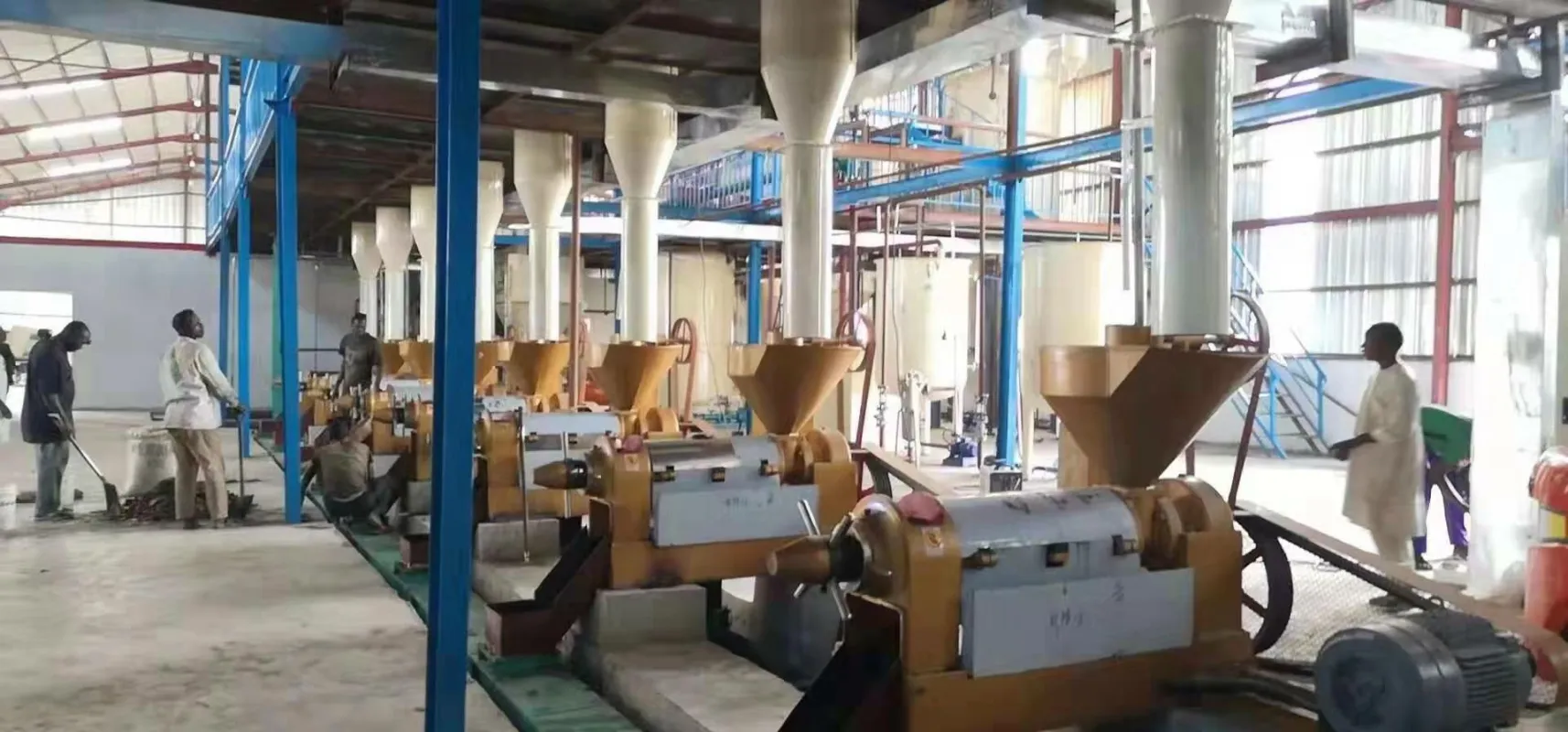
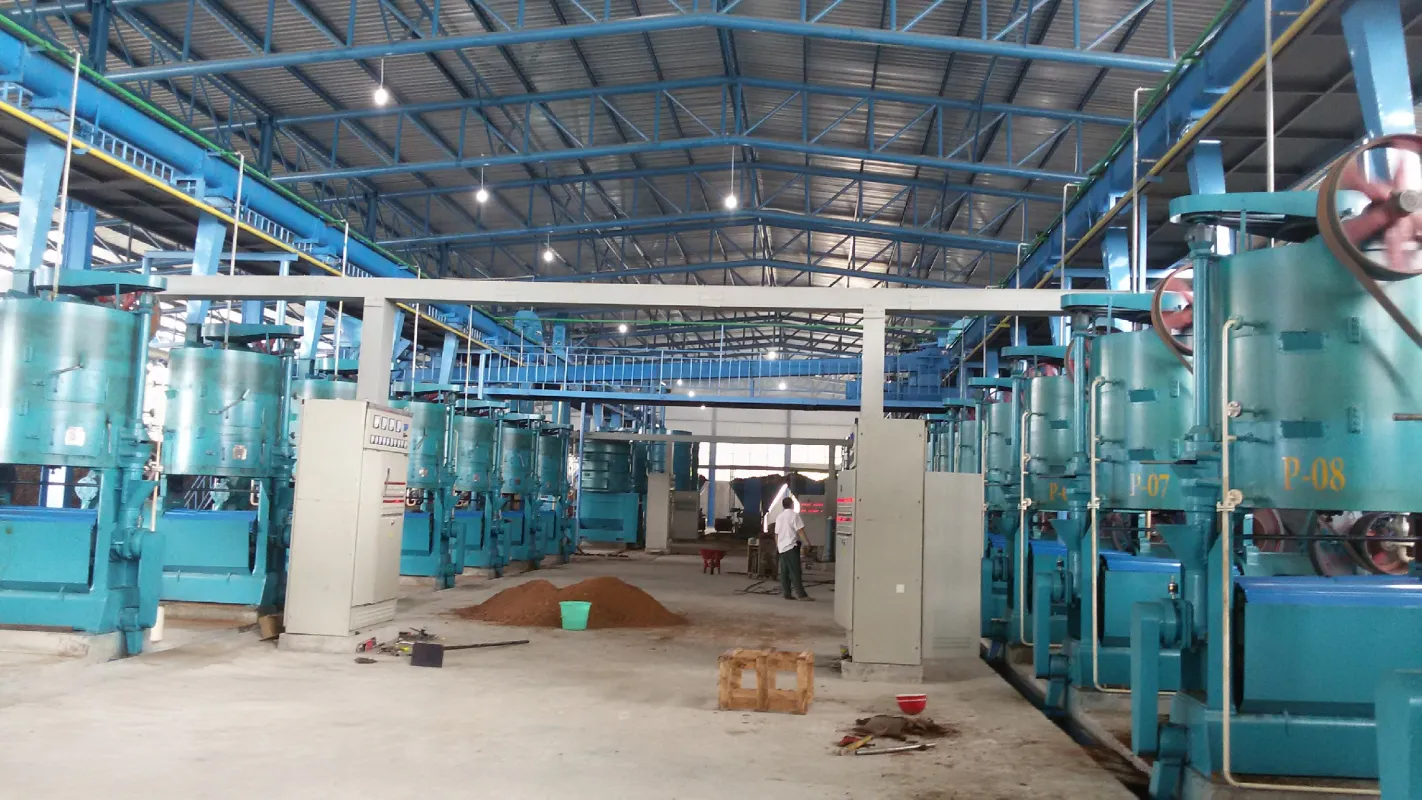
When pressing is often considered
- You want a comparatively straightforward process chain and operational workflow.
- You prioritize controllable production and practical maintenance.
- You plan capacity in stages and prefer modular expansion.
When solvent extraction is often considered
- Your project requires a more comprehensive extraction route aligned with your raw material and output objectives.
- You can support added system integration needs (controls, safety management, compliance).
- You are building toward stable, continuous operation with higher system complexity.
For corn germ oil production lines, Qi'e Grain and Oil Machinery emphasizes precise process control, supporting stable production while balancing high output and low energy consumption according to the chosen process route.
Note: The final route should be confirmed by a project-specific evaluation of raw material conditions, compliance obligations, and operational capability.
4) Refining Depth: Match the Finished Oil Spec to Market and Compliance
Edible oil refining equipment should be selected based on your target market requirements, desired product characteristics, and the degree of process control you want to implement. A deeper refining configuration can involve more units and tighter control points.
Refining selection checklist
- Quality target: clarity, stability, and odor expectations of the finished edible oil.
- Process transparency: measurable control points and documented quality control routines.
- Utilities & footprint: power, steam/heat integration, water, and workshop layout.
- Environmental plan: air emissions, wastewater handling, and site safety requirements.
Qi'e Grain and Oil Machinery designs integrated lines with attention to quality control and energy-saving considerations, helping you choose a refining configuration that aligns with your product plan and operating budget—without over-building the project.
5) Capacity Configuration: Think in Bottlenecks, Not Individual Machines
“Capacity” is only meaningful when pretreatment, pressing/extraction, and refining are configured as a balanced system. To avoid bottlenecks, capacity planning should be done line-by-line, not machine-by-machine.
A practical capacity planning workflow
- Define raw material input expectations (daily/shift plan) and operating hours.
- Confirm the main process route: pressing or solvent extraction (or hybrid, where appropriate).
- Select pretreatment units to ensure steady feed and controllable conditions.
- Configure refining equipment to match the targeted finished oil specification.
- Validate utilities, layout, and maintenance access; then finalize automation instrumentation points.
6) Automation & Environmental Compliance: Plan Early to Reduce Rework
Automation level
Modern lines can integrate automation control to support stable operation and repeatability.
- Define which steps require closed-loop control and alarms.
- Plan operator training and daily maintenance routines.
- Ensure the design supports future upgrades and modular expansion.
EHS / environmental requirements
Environmental compliance is a system-level requirement—especially relevant when selecting extraction and refining configurations.
- Plan for emissions and wastewater interfaces at the design stage.
- Confirm site safety layout, ventilation, and access control needs.
- Document operating procedures that support routine audits and inspections.
7) Why Many Projects Prefer a Modular, Service-Supported Line
For many edible oil processors, the selection decision includes more than the equipment itself—project success also depends on whether you can obtain consistent engineering guidance, installation support, and technical services.
Qi'e corn germ oil production line (design focus)
- Energy efficiency & environmental mindset: designed to reduce avoidable consumption and support practical compliance planning.
- Nutritional retention awareness: process controllability is emphasized to help protect product quality.
- Modular structure: simplifies installation, operation, and maintenance, helping reduce labor and material costs in day-to-day use.
- Adjustable process options: configuration can be tuned to different customer needs and project constraints.
- Human-centered operation: easier operator training and routine maintenance planning.
Service scope (B2B)
- Process design support and equipment selection
- Manufacturing and delivery coordination
- Installation guidance & commissioning support
- Technical service for startup and operation
Applicable to new lines and upgrades—commonly for projects in Asia, Africa, and South America.
Use This Decision Checklist Before Requesting a Quotation
Project basics
- Raw material type and expected condition
- Target capacity and operating schedule
- Preferred process route (pressing / extraction)
Quality & compliance
- Refining depth and finished oil spec goals
- Automation expectations and staffing plan
- Environmental and safety requirements
With these inputs, Qi'e Grain and Oil Machinery Co., Ltd. can help you compare edible oil production line equipment options more efficiently—especially for corn germ oil production line planning—so the final configuration matches your process objectives, budget boundaries, and operational reality.