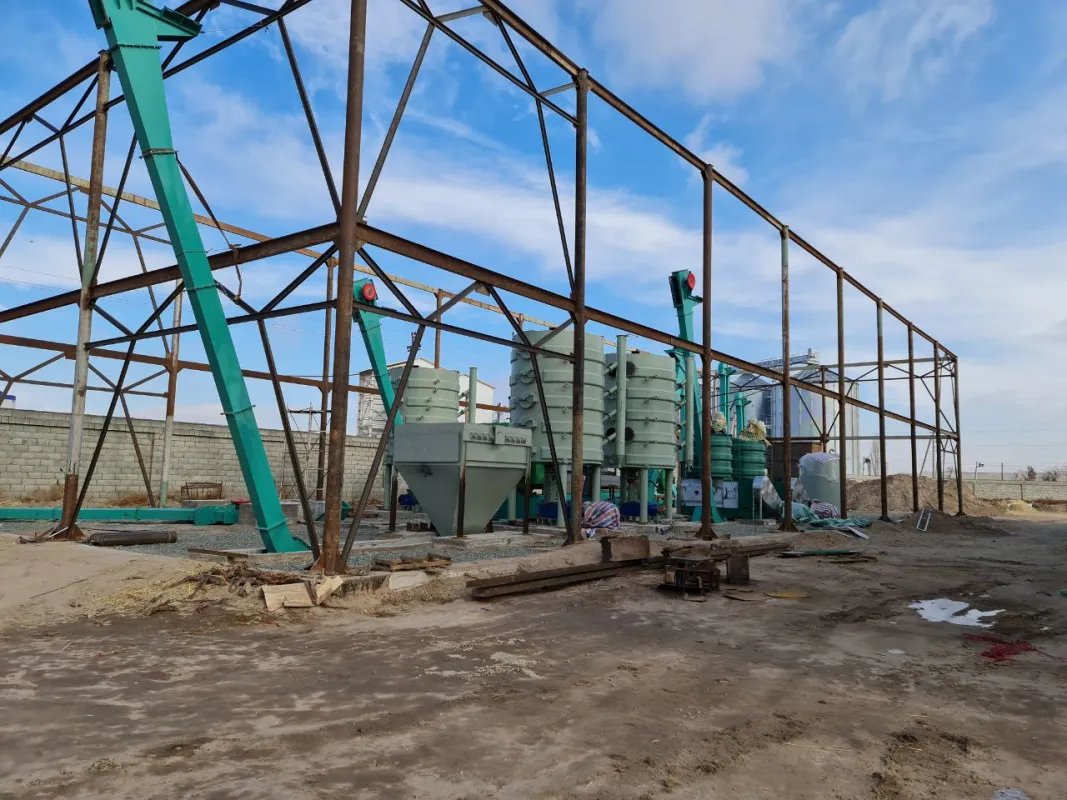
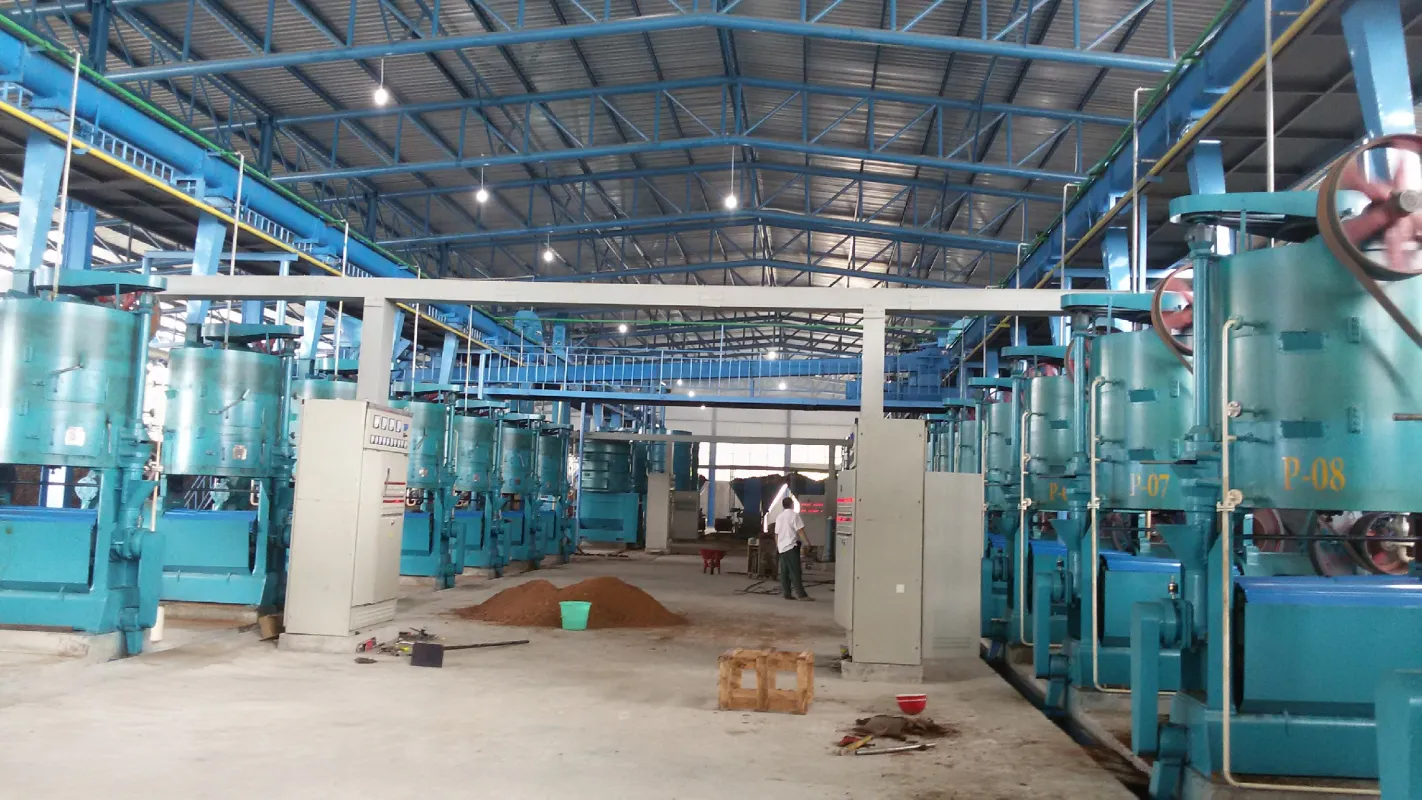
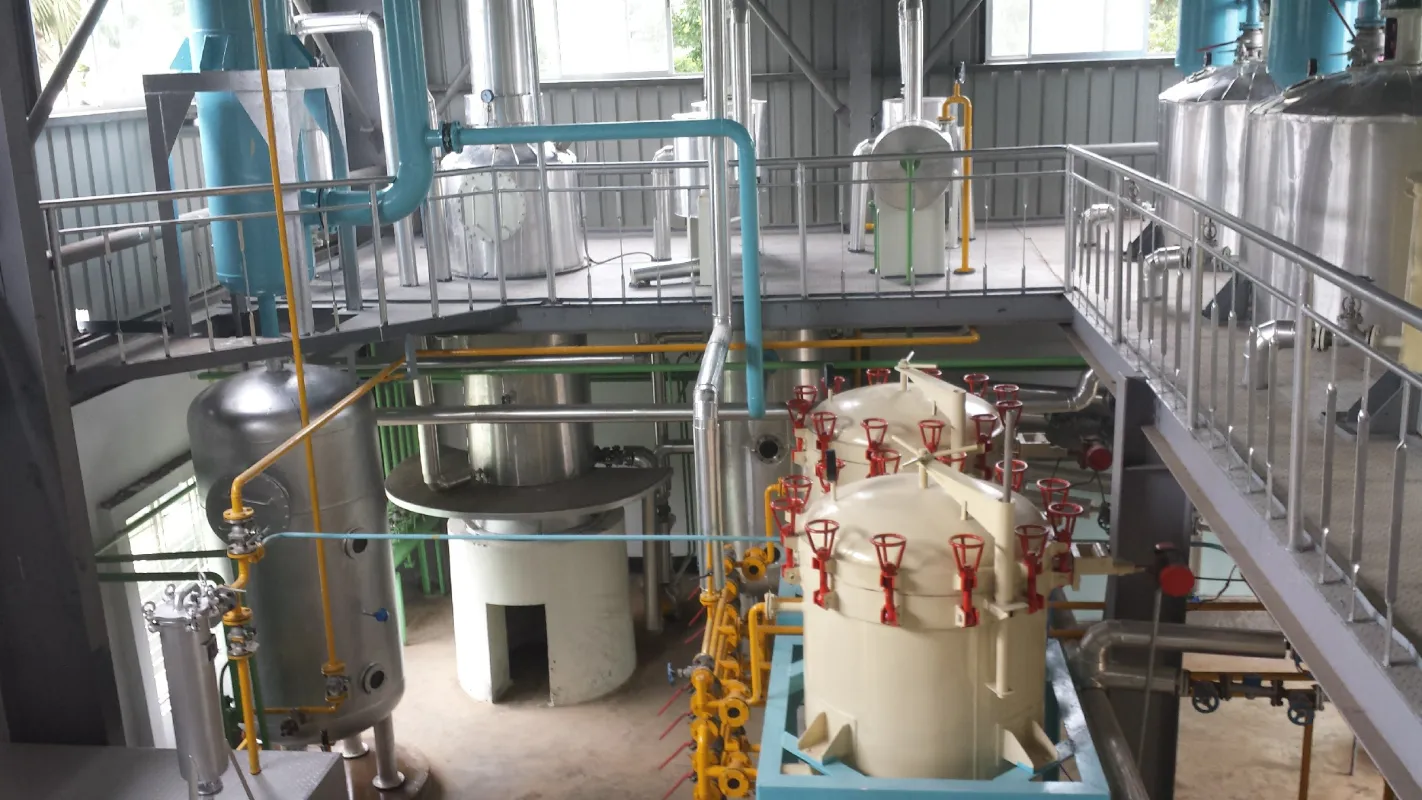
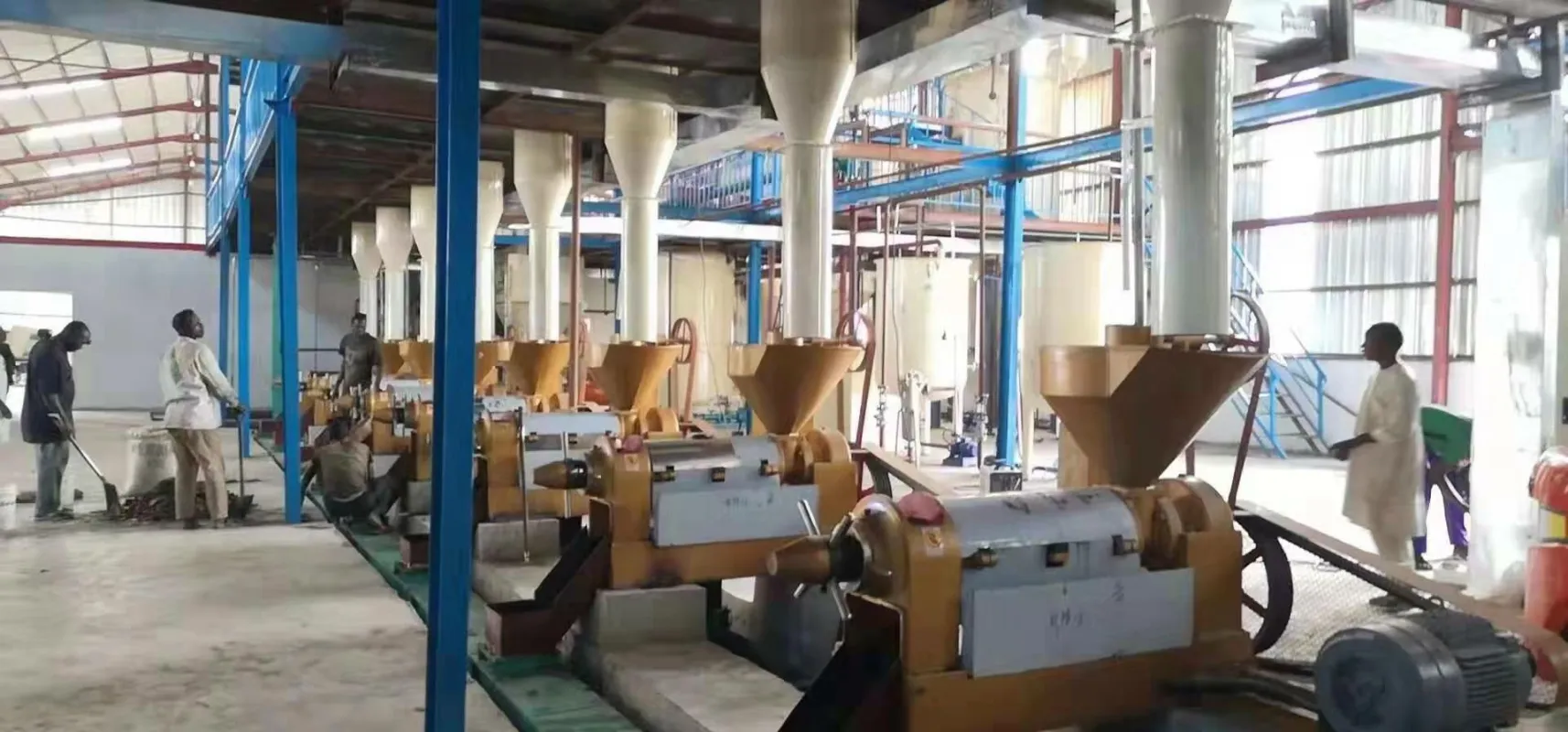
A complete edible oil refining plant is typically organized around four core stages—degumming, deacidification, decolorization, and deodorization—supported by utilities, heat recovery, vacuum systems, filtration, and automation. This page outlines a practical process flow and the key control points commonly used by project teams to evaluate solutions and compare edible oil refining equipment configurations.
Provided by Qi'e Grain and Oil Machinery Co., Ltd. (企鹅集团) — a grain & oil machinery manufacturer supplying oil pressing equipment, oil production line equipment, and edible oil refining equipment for B2B projects.
Common flow (conceptual): Crude oil reception & pre-treatment → Degumming → Deacidification (neutralization or physical route) → Decolorization (bleaching) → Deodorization → polishing filtration → finished oil storage & filling (optional).
The exact order and method selection depend on crude oil type (soybean, sunflower, palm, palm kernel, etc.), impurity profile, target quality specification, and the project’s capacity/energy constraints.
| Stage | Primary function | Key control points (typical) | Equipment impact |
|---|---|---|---|
| Degumming | Remove phospholipids/gums and associated impurities to improve stability and downstream separation. | Mixing quality (dispersion), residence time, reaction water/acid dosing strategy (as applicable), temperature stability, separation efficiency, and sludge/soapstock handling. | Mixer design, separators/settlers, instrumentation for dosing and temperature control. |
| Deacidification | Reduce free fatty acids (FFA) and manage soaps/impurities to meet product specs and improve taste/shelf stability. | Alkali or physical route selection, dosing accuracy, reaction time, separation/washing (if used), and loss control (oil entrainment in soapstock/distillate). | Reactor/neutralizer, separation system, washing/drying section, automation for dosing consistency. |
| Decolorization (Bleaching) | Reduce pigments (e.g., carotenoids, chlorophyll), trace metals, and oxidation precursors for better appearance and stability. | Adsorbent type/dosage, vacuum and moisture control (where applicable), mixing uniformity, contact time, filtration performance, and spent earth management. | Bleacher vessel, vacuum system, leaf/pressure filters, cake discharge reliability. |
| Deodorization | Strip volatile compounds responsible for odor/taste and further improve oil stability; can also reduce FFA in physical refining. | Vacuum level stability, steam quality & distribution, temperature profile, residence time, heat recovery, and prevention of thermal degradation (process discipline and control). | Deodorizer design, vacuum package, heat exchangers, condensers, and control system responsiveness. |
Control points should be defined from your target oil specification and crude oil variability. A stable refining process is achieved by aligning process parameters, equipment capability, and operator procedures—not by relying on any single stage.
In real projects, a “complete edible oil refining plant” is more than the four core stages. Refining performance often depends on these interfaces:
Qi'e Grain and Oil Machinery Co., Ltd. works with edible oil producers and project teams to align process flow, equipment selection, and control points with the target oil specification and local operating conditions.
For customers building integrated lines, Qi'e can coordinate refining with upstream and related equipment such as oil pressing and extraction systems—supporting coherent material flow and project execution.
If you are comparing edible oil refining equipment solutions for Asia, Africa, or South America markets, sharing your crude oil type, capacity, and quality requirements will help define a clear set of technical control points for evaluation.
Feedstock
Crude oil type(s), typical impurities/variation, and pre-treatment status.
Capacity & operating mode
t/day target, shifts, expected uptime strategy, and expansion considerations.
Quality target
Appearance, odor/taste goals, stability expectations, and compliance needs.
Site conditions
Available steam/power/water, space constraints, and local standards.
Contact Qi'e Grain and Oil Machinery with your crude oil type and target finished oil specification. We can align the refining plant process flow and the key control points (degumming, deacidification, decolorization, deodorization) to support solution comparison and technical evaluation.