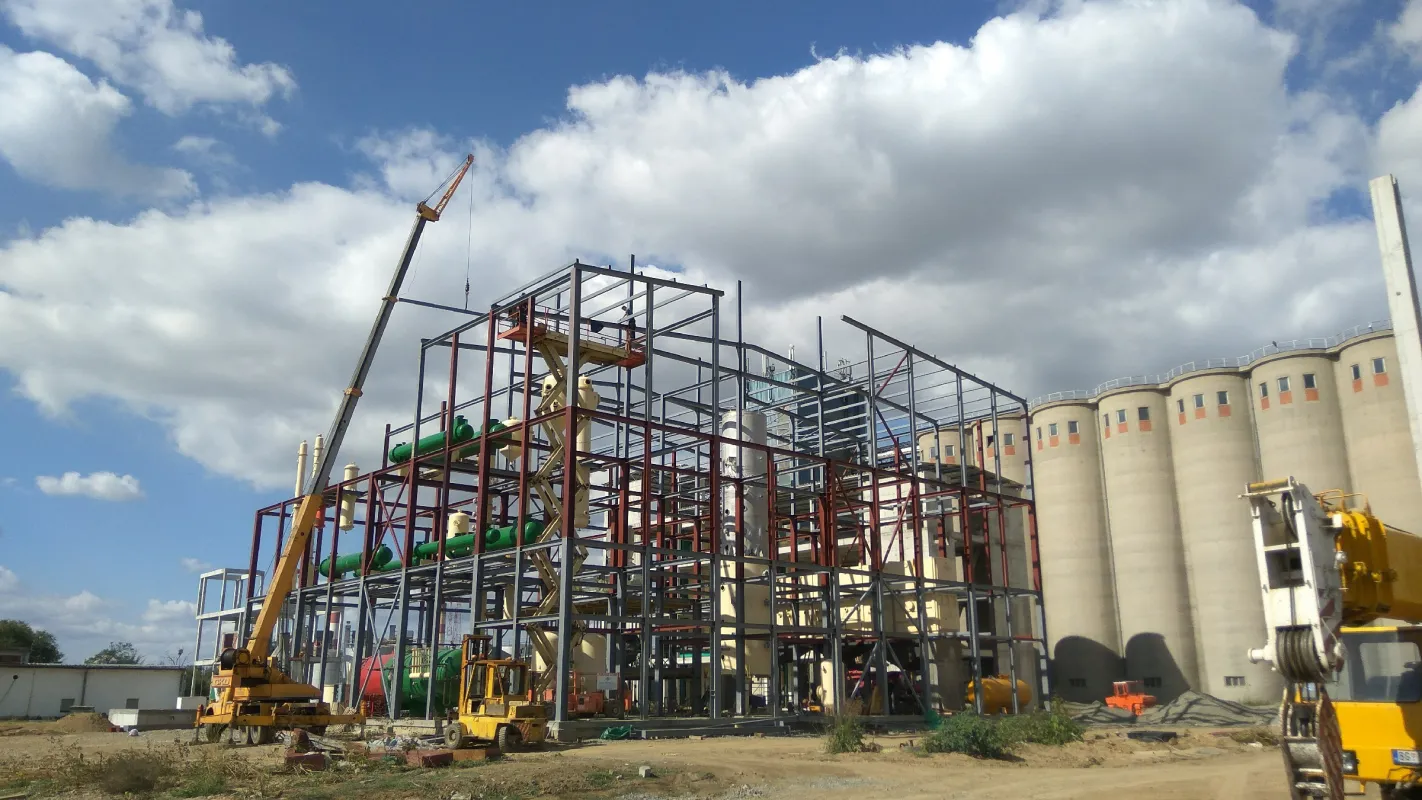
What Is Grain & Oil Machinery Equipment? A Complete System from Pressing to Refining
2026-09-04
Qi'e Grain and Oil Machinery Co., Ltd. explains what grain and oil machinery equipment includes—from oil pressing and oilseed pretreatment production lines to solvent extraction and edible oil refining—helping B2B buyers understand how to select configurations by oil type, capacity and quality targets.
Grain & oil machinery equipment is not a single machine—it is a connected processing system that turns oilseeds into compliant, stable edible oil. For B2B projects, buyers typically evaluate the full chain: oilseed pretreatment, oil pressing, vegetable oil solvent extraction (when applicable), and edible oil refining, plus optional filling/packaging and utilities.
Qi'e Grain and Oil Machinery Co., Ltd. (企鹅集团) develops and supplies integrated grain & oil processing equipment for international B2B customers. This page explains how the major modules differ, how they work together, and how to select configurations by oil type (e.g., rapeseed), capacity, and target oil quality—including planning or upgrading a fully automatic rapeseed oil production line.
Quick definition (for procurement teams): Grain & oil machinery equipment refers to the complete set of industrial machines used to preprocess oilseeds, extract crude oil (pressing and/or extraction), and refine it into edible oil meeting the required standard, with stable operation and hygienic design.
Pressing line: mechanical extraction, often used for many oilseeds and for specific product positioning.
Solvent extraction: used when process design requires it; integrated with pretreatment and oil recovery steps.
Refining line: upgrades crude oil into stable, market-ready edible oil.
How pressing, extraction, and refining differ—and how they connect
1) Oilseed pretreatment production lines
Pretreatment prepares the raw material to achieve stable throughput and consistent extraction performance. In B2B projects, pretreatment is selected based on seed characteristics, target capacity, and the chosen extraction route (pressing only or pressing + solvent extraction).
Main objective: create repeatable feed conditions for downstream machines.
Selection logic: oilseed type (e.g., rapeseed), moisture/impurities condition, and expected operating mode.
2) Oil pressing equipment (mechanical extraction)
Pressing extracts oil through mechanical force. For many projects it is the core module, and it may also be integrated with other steps depending on the overall process design.
Focus: operational stability, controllable process, and consistent output for the next stage.
Key interfaces: material feeding, discharge handling, automation and safety interlocks.
Solvent extraction is a process route used in some edible oil projects. It is typically evaluated when buyers design a complete extraction strategy around the raw material, target capacity, and plant requirements. In system planning, this module must be matched to pretreatment and downstream refining to ensure smooth, hygienic operation.
Compliance note: if solvent extraction is adopted, confirm local regulatory requirements, safety standards, and plant EHS constraints early in the engineering phase.
4) Edible oil refining equipment
Refining transforms crude oil into a market-ready product aligned with your quality targets. For B2B buyers, refining configuration is typically driven by desired oil grade, end-market requirements, and the characteristics of the incoming crude oil from pressing and/or extraction.
Focus: consistent quality, hygienic operation, and stable output for filling/packaging.
Integration: refining is designed as part of the whole system—not as a standalone add-on.
Configuration logic for B2B selection: oil type, capacity, and quality targets
Decision factor
What to confirm
How it impacts equipment selection
Oilseed type (e.g., rapeseed)
Raw material properties, supply stability, and intended product positioning.
Determines pretreatment route and the practical pressing/extraction/refining combination.
Required capacity
Daily/annual output goals, operating shifts, and expansion plan.
Drives sizing of main machines, conveyors, tanks, and control system complexity.
Target oil quality
Required refining level, stability, and packaging format.
Determines refining configuration and whether to include filling/packaging solutions.
Site constraints
Layout, utilities, safety management requirements, and operator skill level.
Affects equipment layout design, automation level, and commissioning/training scope.
Practical planning note: In real projects, the best configuration is the one that balances your target quality with stable operation, local compliance, and maintainable automation—not just the highest specification.
Featured solution: Fully Automatic Rapeseed Oil Production Line (turnkey, integrated)
The Fully Automatic Rapeseed Oil Production Line from Qi'e Grain and Oil Machinery Co., Ltd. is designed for B2B buyers who want a streamlined, consistent, and controllable rapeseed oil process. It is engineered as an integrated equipment package covering extraction and refining workflow planning, and can be matched with an oil packaging solution based on your project scope.
Design intent: support stable industrial operation while protecting oil quality targets through appropriate process control and hygienic equipment integration.
Integrated equipment for cold pressing and solvent extraction routes (project-dependent configuration).
Modern control system for simplified operation, safety, and hygiene management.
Built for durability and lower maintenance cost to support continuous production.
Advantages & features (as supplied)
High efficiency: automatic control simplifies the workflow and improves production efficiency.
Low energy consumption: optimized design to reduce energy use.
Reliable build quality: durable materials and mature manufacturing for stable operation and long service life.
Safety & environmental compliance focus: designed to align with international safety and environmental expectations and reduce waste discharge in production.
Customization: configuration and layout can be tailored to your needs.
Technical support: installation guidance, commissioning, training, and after-sales service.
What you can expect in a typical B2B delivery scope
For projects in Asia, Africa, and South America, Qi'e Grain and Oil Machinery Co., Ltd. typically supports customers with equipment supply plus engineering-oriented services aligned with the selected system modules.
Engineering & planning
Process route matching by oil type and quality targets
Equipment configuration and layout recommendations
Delivery & commissioning
Installation guidance and commissioning support
Operator training for safe, hygienic operation
Lifecycle support
Maintenance guidance and troubleshooting support
Spare parts and service coordination as required
For RFQ preparation: share your oilseed (rapeseed), target capacity, desired refining level, available utilities, and site layout constraints—this helps define a clear configuration and avoid scope gaps.
Related equipment modules
If your project scope includes refining, you can review the dedicated module here: Edible Oil Refining Equipment. Qi'e Grain and Oil Machinery Co., Ltd. also supplies oil pressing equipment, solvent extraction equipment, and integrated oil production line equipment for turnkey B2B projects.
Brand principles: people-oriented approach, quality as the lifeline, and customer priority—supported by technology innovation, quality-first manufacturing, and service-first delivery.