Why Many Oil Mills Fail to Reach Designed Capacity: Key Risks in Equipment Selection and Process Configuration
Qi'e Grain and Oil Machinery Co., Ltd. explains why oil pressing projects often fail to reach designed capacity—covering common issues such as improper equipment selection, mismatched process configuration, high oil loss, and automation gaps—so buyers can avoid critical risks before installation and commissioning.
Many edible oil projects look solid on paper—rated throughput, motor power, and “matching” equipment lists—yet fall short after installation and commissioning. In most cases, the root cause is not a single faulty machine, but a chain of selection and configuration decisions that create hidden bottlenecks, higher-than-expected oil loss, or operating constraints.
As a grain & oil machinery manufacturer and solution provider, Qi'e Grain and Oil Machinery Co., Ltd. (企鹅集团) summarizes the most common reasons oil mills miss designed capacity—and how engineering buyers can reduce risk before equipment is shipped to site.
What “Designed Capacity” Really Depends On
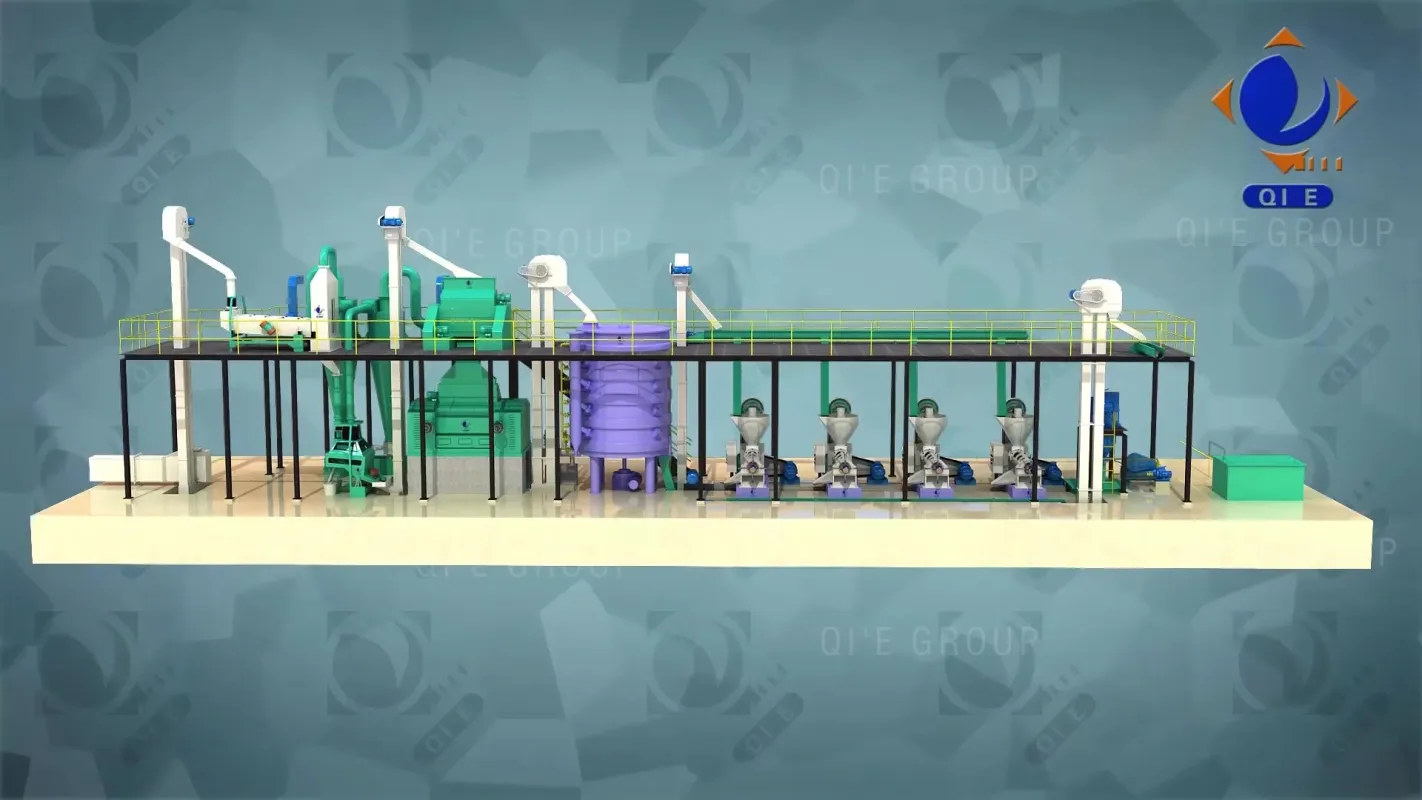
In a typical edible oil processing project, the headline capacity is only achievable when every major stage is sized and configured consistently and can run stably: seed receiving & cleaning → conditioning & flaking (or cooking) → pressing (or solvent extraction) → oil clarification → refining (if included) → storage & filling. If any stage cannot sustain the upstream rate, the overall plant throughput drops to the weakest link.
Typical capacity limiters
- Uneven raw material quality or unstable feeding
- Bottlenecks between pre-treatment, pressing/extraction, and refining
- High residual oil in cake/meal due to process mismatch
- Automation level that doesn’t fit staffing and operations
Why these issues get missed
- Equipment lists are compared by name, not by throughput balance
- Assumptions about moisture, impurities, or oil content are unrealistic
- Utilities and site constraints are not verified early enough
- Commissioning time is underestimated
Common Mistake #1: Selecting Equipment by “Rated t/d” Without Bottleneck Mapping
A frequent cause of insufficient capacity is sizing one flagship machine (for example, the press or extractor) correctly while supporting units are undersized or poorly integrated. Real throughput depends on continuous flow and short residence times at critical points.
| Selection checkpoint |
What can go wrong |
What to verify before ordering |
| Feeding & conveying |
Bridging, surging feed, frequent stops |
Stable metering design, buffer bins, anti-bridging measures |
| Pre-treatment capacity match |
Flaking/cooking cannot keep up; press runs underfed |
Material conditioning targets; residence time; heater/steam availability |
| Oil clarification |
Settling/filtration becomes the bottleneck |
Filter sizing, solids load expectation, cleaning cycle time |
| Tank farm & pumps |
No buffer; shutdowns during transfers |
Working volume, transfer rate, CIP/cleaning plan (if needed) |
Common Mistake #2: Process Configuration Mismatch Across Pressing / Extraction / Refining
“Capacity” is often discussed as if it were a single number, but the plant is a system. A configuration that works for one oilseed or one quality grade may underperform when feedstock changes. Capacity loss can appear when the project combines stages without aligning their operating windows.
Symptoms
- Press output fluctuates; downstream cannot stabilize
- Frequent manual interventions to maintain quality
- Refining becomes the “hidden bottleneck” after start-up
Engineering focus points
- Stage-to-stage balance: ensure the real (not theoretical) throughput is aligned
- Oil quality targets: clarify required degumming/neutralization/bleaching/deodorization scope early
- Utilities: steam, electricity, water, and compressed air must support continuous operation
A practical way to prevent mismatch is to review the full process configuration as a throughput chain, not as separate machines—especially where pre-treatment, pressing/extraction, and refining are supplied by different sources.
Common Mistake #3: Underestimating Oil Loss (Residual Oil) and Its Impact on Throughput
High oil loss does not only reduce yield; it can also reduce effective capacity because operators slow down to stabilize pressing, reduce fines, or prevent blockages. Residual oil is heavily affected by raw material condition and the pre-treatment/pressing parameters.
What typically drives higher-than-expected oil loss
- Moisture and temperature control not aligned with the chosen press/extractor configuration
- Impurities and inconsistent seed quality increasing wear and reducing press stability
- Improper flake thickness / conditioning reducing oil release efficiency
- Inadequate filtration/clarification causing downstream interruptions
To control oil loss, the selection of oil pressing equipment and the edible oil processing process configuration should be reviewed together—based on the real raw material profile and operating plan.
Common Mistake #4: Automation Level That Doesn’t Fit the Operation
Automation is not a simple “higher is better” choice. A mismatch—either too low or too complex—can limit throughput. Low automation may increase human dependency and variability; overly complex systems can create maintenance and downtime risks if local support and spare parts planning are not ready.
When automation is too low
- Inconsistent feeding and parameter control
- More frequent off-spec oil quality events
- Lower stable throughput due to manual adjustments
When automation is too complex
- Longer troubleshooting time during commissioning
- Higher dependency on specialized technicians
- Downtime risk if spares and support plans are unclear
A Buyer’s Checklist: Reduce Risk Before Installation & Commissioning
The following checklist is commonly used in engineering reviews to reduce common oil pressing project problems that lead to insufficient capacity:
- Define the raw material profile (expected variability, impurity level, moisture control approach) and confirm the process window.
- Map the throughput chain from cleaning to storage; identify bottlenecks by real operating capacity, not nameplate ratings.
- Confirm stage interfaces (conveying, buffering, heat/steam supply, filtration load, tank transfer rates).
- Align quality targets with configuration—especially if refining is included (scope impacts capacity and utilities).
- Match automation to staffing and define commissioning, training, and spare parts planning upfront.
How Qi'e Grain and Oil Machinery Supports Practical Capacity Planning
Qi'e Grain and Oil Machinery Co., Ltd. (企鹅集团) supplies oil pressing equipment, oil production line equipment, and edible oil refining equipment. In project discussions, we focus on equipment selection and process configuration as an integrated system so buyers can identify capacity risks early—before procurement decisions become costly to change.
What we typically clarify with buyers
- Target products and operating mode (continuous/batch where applicable)
- Capacity expectation vs. stability requirement during long runs
- Key constraints: footprint, utilities, labor plan, and maintenance capability
What this helps prevent
- Over- or under-sizing that causes persistent bottlenecks
- Higher oil loss due to misaligned pre-treatment and pressing/extraction
- Automation gaps that reduce stable throughput
If you are evaluating an edible oil machinery package or troubleshooting insufficient capacity in an oil mill, prepare your raw material assumptions, target capacity, and process scope. A structured review of equipment selection and process configuration can significantly reduce commissioning surprises and support stable, repeatable throughput.