Home > News > How to Choose the Right Oil Pressing & Edible Oil Processing Equipment | Qi'e Grain and Oil Machinery

A Practical Framework for Selecting Oil Pressing, Extraction, and Refining Equipment for Grain & Oil Projects

2026-09-26
Qi'e Grain and Oil Machinery explains how grain and oil processing companies can select oil pressing, solvent extraction, and edible oil refining equipment based on feedstock, capacity, oil quality targets, automation, environmental compliance, budget, and long-term technical support—built around practical evaluation for corn germ oil production line projects.
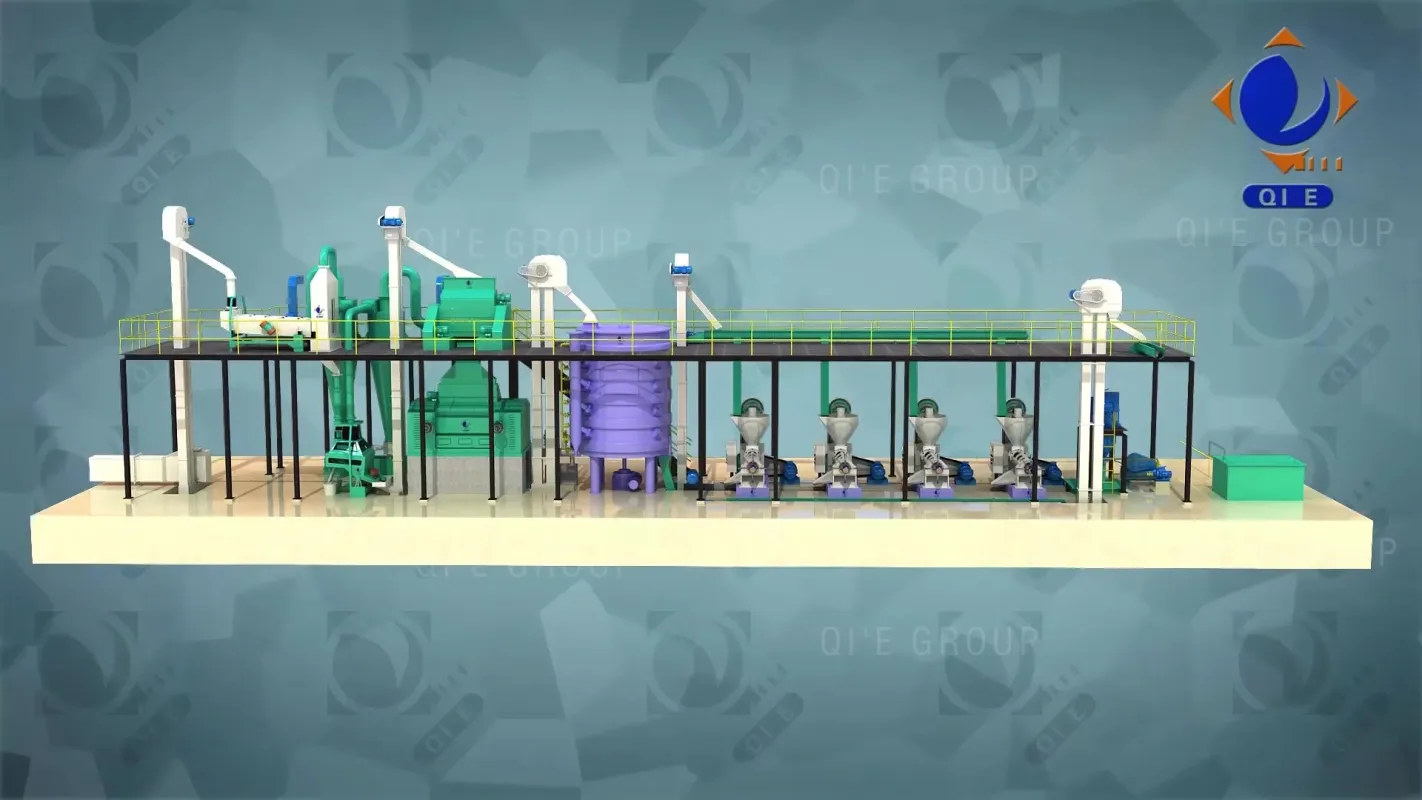
Engineers reviewing an edible oil processing flow diagram for selecting oil pressing, solvent extraction, and refining equipment

Selecting the right oil pressing, solvent extraction, and edible oil refining equipment is not only a purchasing decision—it is an engineering decision that affects yield stability, operating cost, oil quality targets, and long-term compliance. Qi'e Grain and Oil Machinery Co., Ltd. (企鹅集团) provides an evaluation framework used by grain & oil processors when planning new plants or upgrading existing lines—especially for projects involving a corn germ oil production line, where nutrition retention and energy efficiency are often key requirements.

Scope of this guide: feedstock (including corn germ), target capacity, oil quality goals (including nutrition retention), automation, environmental requirements, budget, and lifecycle technical support—mapped to equipment choices across pressing/extraction/refining.

1) Start with Feedstock Reality: Why “Corn Germ” Changes the Configuration

Different oil-bearing materials behave differently in processing. For corn germ, many project owners prioritize both quality consistency and nutrition retention. That typically means the configuration should be evaluated as a complete line—pre-treatment + pressing and/or extraction + refining + filtration + utilities—instead of choosing standalone machines.

  • Feedstock condition: moisture, cleanliness, and particle size influence process stability and energy use.
  • Desired oil profile: “nutrition retention” goals may affect process temperature strategy and refining intensity.
  • By-product handling: planning meal/cake handling early helps avoid bottlenecks in continuous operation.

2) Define Capacity the Engineering Way (Not Just “Tons per Day”)

Capacity should be translated into process constraints: operating hours, batch vs. continuous operation, peak-season supply, and future expansion. Qi'e Grain and Oil Machinery often recommends a modular production line approach so that installation, operation, and maintenance remain manageable—while keeping a clear path for scaling.

Capacity Inputs to Confirm

  • Daily/annual throughput target
  • Working shifts & uptime expectations
  • Raw material supply stability
  • Planned future expansion

Common Capacity Risks

  • Under-sizing utilities (steam, power, cooling)
  • Mismatch between extraction/pressing and refining capacity
  • Insufficient buffer/storage causing stoppages

3) Set Oil Quality Targets: Nutrition Retention + Stability + Market Requirements

Oil quality is not defined by one parameter; it is the outcome of the full process design and control. For corn germ oil projects, Qi'e Grain and Oil Machinery’s product philosophy emphasizes precise process control to support both product quality and energy efficiency.

Quality Target What to Verify in Equipment Selection
Nutrition retention goals Process temperature strategy, controllability, and refining intensity options aligned with target profile.
Batch-to-batch consistency Automation level, sensor/controls coverage, and repeatability of key steps from pre-treatment to refining.
Operational stability Line balance, buffer design, maintenance accessibility, and suitability for continuous operation.

4) Choose Pressing vs. Solvent Extraction (or Combined) Based on Constraints

A practical selection method is to decide the processing route first, then select equipment accordingly. Depending on your feedstock characteristics, capacity, and operating preferences, your project may lean toward pressing, solvent extraction, or a combined route. The key is ensuring that your chosen route can be controlled precisely and integrated with downstream edible oil refining equipment.

Decision Questions to Ask

  1. What is the target throughput and expected uptime?
  2. What oil quality profile do you need (including nutrition retention targets)?
  3. How will environmental compliance and safety requirements be met for the chosen route?
  4. Do you have utilities and operator capability for the intended automation level?
  5. What is the total lifecycle cost (energy, maintenance, consumables, downtime)?

5) Automation & Process Control: Reduce Variability, Improve Repeatability

For grain & oil plants, automation is less about “more screens” and more about controlling the process variables that matter. The corn germ oil production line offered by Qi'e Grain and Oil Machinery is designed around modern process flow and automation control to help maintain stable operation and consistent output.

  • Control philosophy: define what must be controlled automatically vs. manually to match staffing and skills.
  • Maintenance friendliness: clear layout and human-centered design supports training and daily servicing.
  • Line transparency: monitoring of key nodes supports faster troubleshooting and reduces avoidable downtime.

6) Energy Efficiency & Environmental Compliance: Design-In, Don’t Patch Later

Energy use and environmental requirements should be evaluated at the line-design stage. Qi'e Grain and Oil Machinery’s corn germ oil line highlights low energy consumption and an environment-conscious design, aiming to reduce operating cost while supporting compliance-oriented plant planning.

What to Evaluate

  • Energy consumption drivers across each step
  • Ventilation, odor, and wastewater interfaces
  • Safety and compliance needs for extraction/refining utilities

Why It Matters

When energy and compliance are treated as core design inputs, equipment selection becomes clearer, integration is smoother, and later retrofits are less likely to disrupt production.

7) Budgeting with a Lifecycle View: CAPEX + OPEX + Maintainability

A budget that only considers initial equipment price often leads to hidden costs. Qi'e Grain and Oil Machinery emphasizes modular design and easy installation, operation, and maintenance to help reduce labor complexity and ongoing material/maintenance burden—particularly relevant for new entrants and fast-growing markets.

Lifecycle Cost Checklist

  • Energy: expected consumption per operating mode
  • Consumables & spares: planned replacement cycles and availability
  • Downtime risk: accessibility, maintainability, and operator training needs
  • Scalability: whether capacity expansion requires major rework

8) Recommended Selection Workflow for Corn Germ Oil Production Line Projects

Use the workflow below to keep evaluation structured and comparable across suppliers and configurations:

  1. Clarify inputs: feedstock properties, supply rhythm, quality targets, and compliance constraints.
  2. Define capacity & operating model: hours/day, batch vs. continuous, growth plan.
  3. Choose route: pressing, solvent extraction, or combined—based on constraints and goals.
  4. Match equipment set: pre-treatment, core processing, refining, filtration, utilities, and control system.
  5. Validate operability: maintainability, training needs, and spare parts strategy.
  6. Lock lifecycle support: engineering guidance, installation coordination, commissioning, and ongoing technical service.

Why Work with Qi'e Grain and Oil Machinery

Qi'e Grain and Oil Machinery (企鹅集团) is focused on R&D, manufacturing, sales, and service for grain & oil machinery, covering oil pressing equipment, oil production line equipment, and edible oil refining equipment. Our engineering-oriented approach helps project teams translate targets—capacity, quality, automation, and compliance—into a practical equipment configuration, with support that extends beyond delivery to installation and technical service.

If you are evaluating configurations for a corn germ oil production line, share your feedstock assumptions, target capacity, and oil quality requirements. We can help map them to a modular, maintainable processing line that fits your operating conditions and budget boundaries.
Name *
Email *
Message *
Recommended Products