Sunflower Oil Refining SOP: Standardized Process Template from Degumming to Deodorization
2026-01-05
This practical, copy-ready SOP guides professionals through the complete sunflower oil refining workflow—from degumming and neutralization to bleaching and deodorization—detailing critical parameters, control points, and troubleshooting for stable, high-yield operations. It addresses regional quality preferences across Asia, Africa, and South America, and integrates QA monitoring, energy-saving practices, and sustainability considerations. The template includes recommended ranges for acid and caustic dosing, bleaching earth optimization, deodorization temperature/vacuum control, and sensory and nutrition retention checkpoints. Visual aids (infographics and flowcharts), real-shot video link examples, expert quote boxes, and an interactive survey are embedded to support implementation and continuous improvement. QIE Group’s high-efficiency, stable sunflower oil production lines ensure high-quality refining solutions that boost capacity and market competitiveness.
From Raw Material to Finished Product: SOP for Sunflower Oil Refining (Degumming, Neutralization, Bleaching, Deodorization)
This practical, SEO-optimized guide provides a standardized operating procedure (SOP) for sunflower oil refining, covering four core steps—degumming, deacidification (neutralization), bleaching, and deodorization. It highlights critical parameters, QA checkpoints, regional specifications for Asia, Africa, and South America, and actionable solutions to common process issues. Built for technical teams and plant managers seeking yield improvement and reliable edible oil processing equipment.
Process Flow at a Glance
Crude Sunflower Oil
→
Degumming
→
Neutralization
→
Bleaching
→
Deodorization
→
Refined Sunflower Oil
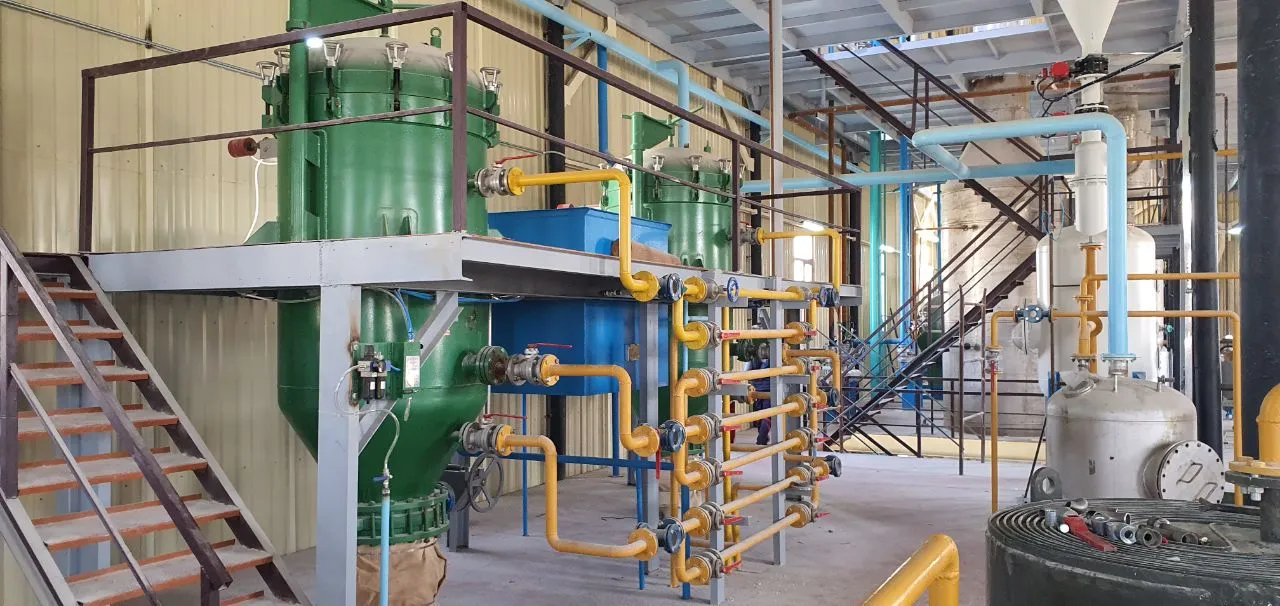
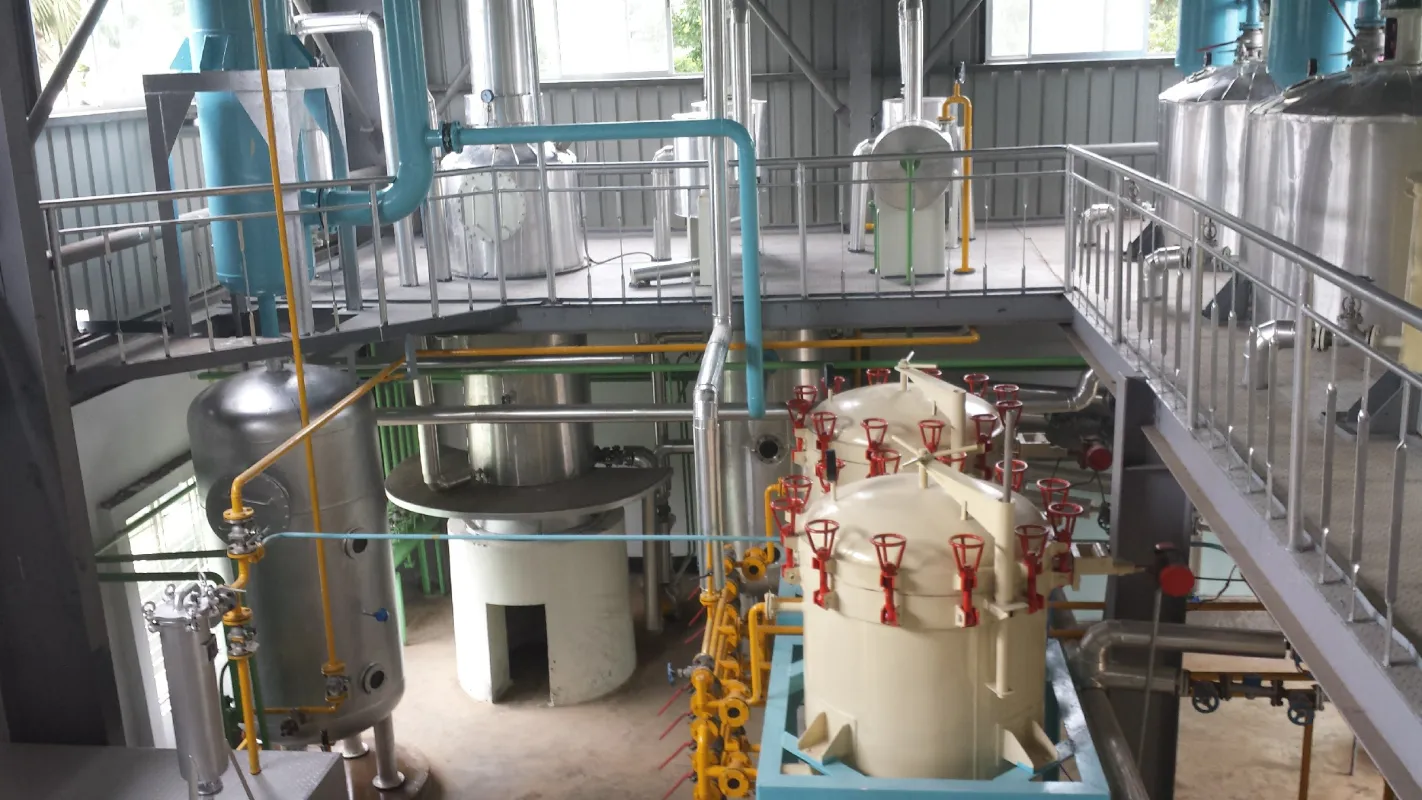
Inline centrifuges, vacuum systems, heat-exchangers, and polish filters are integrated for continuous operation.
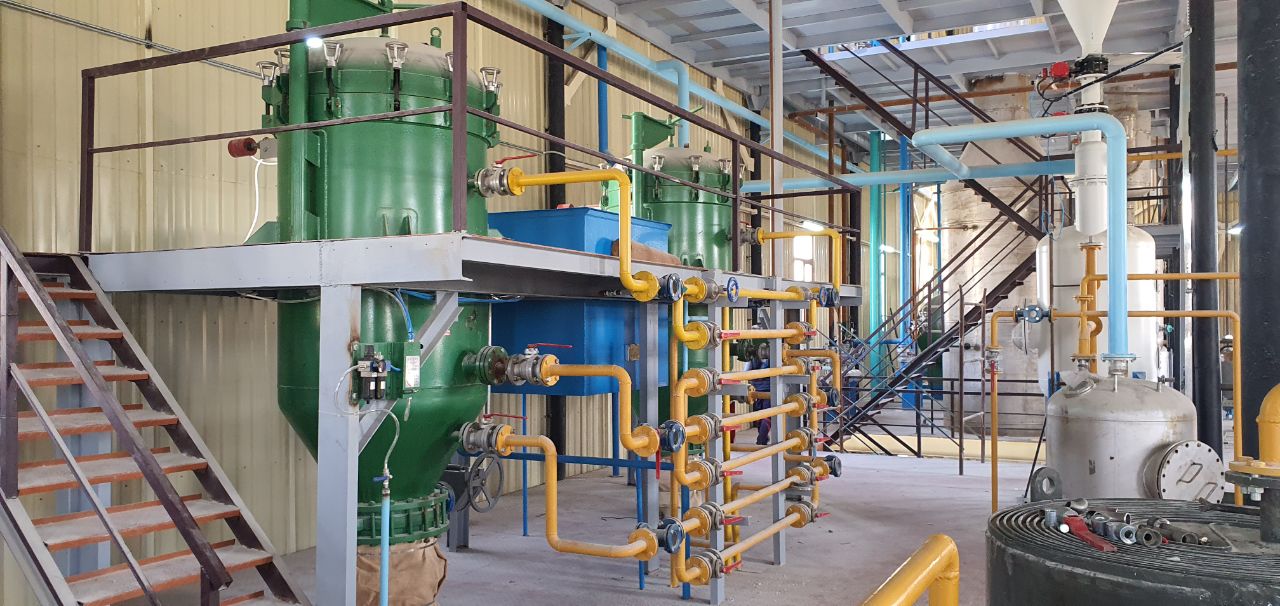
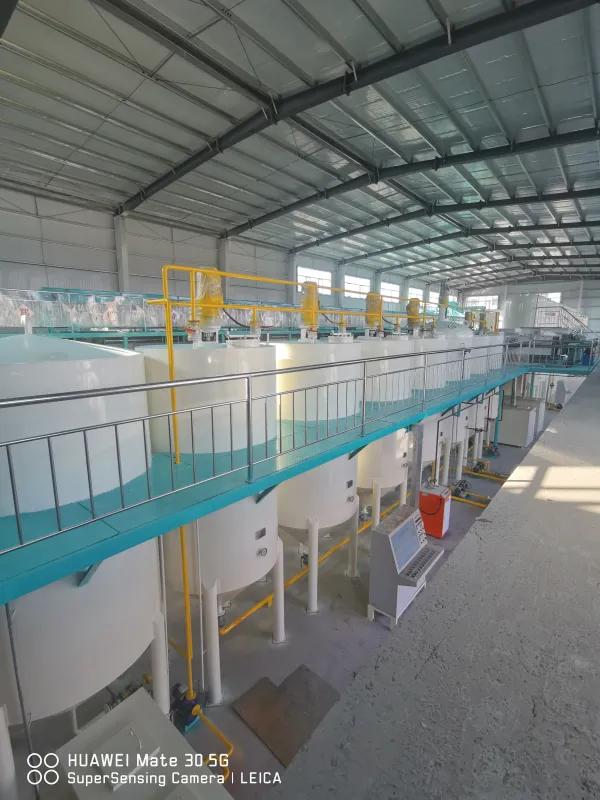
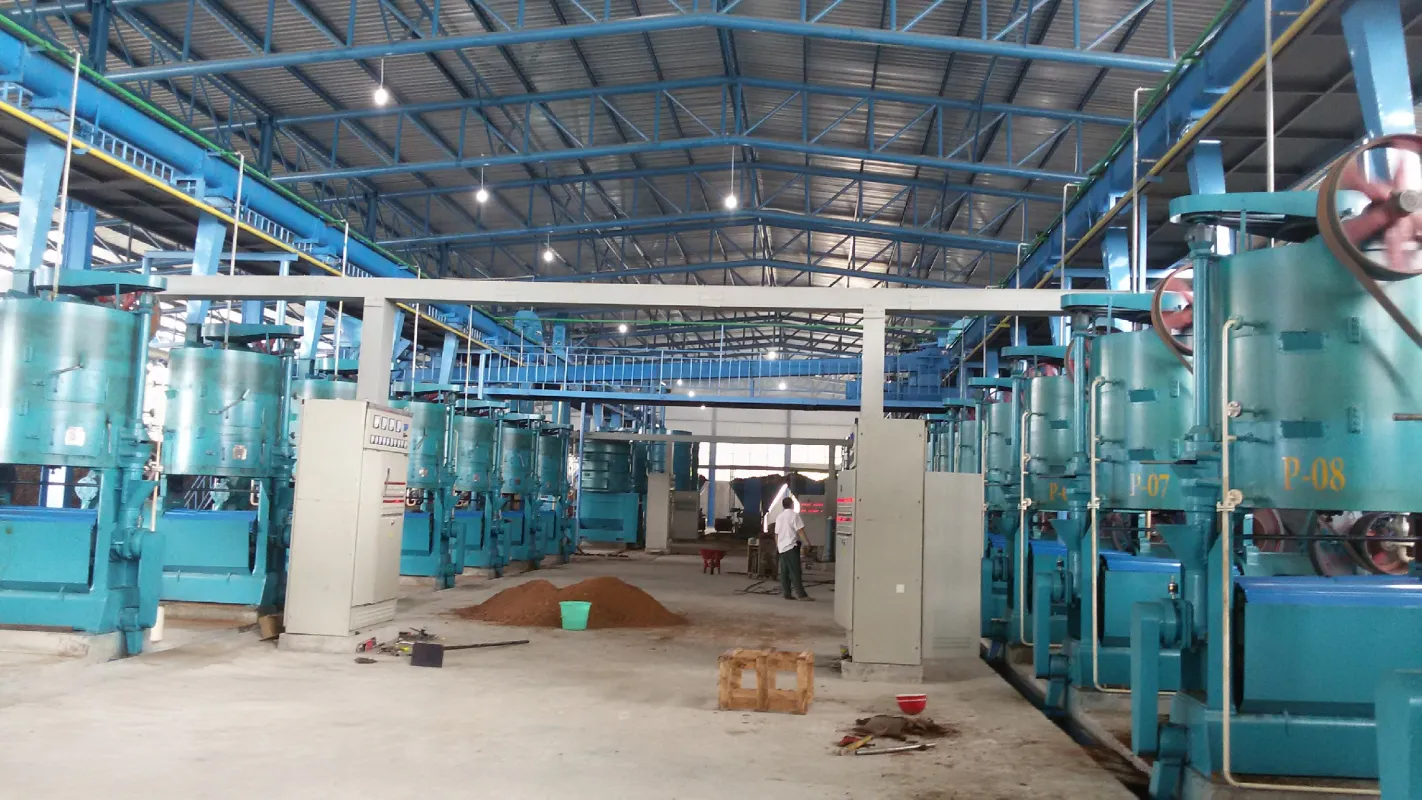
Equipment layout example for a compact 30–100 TPD refining module
SOP Step 1 — Degumming (Water/Acid/Enzymatic)
Objective: Remove phospholipids and trace metals; prepare for chemical or physical refining.
Key parameters:
Temperature: 70–80°C (preheat via plate heat-exchanger)
Phosphoric or citric acid: 0.05–0.2% w/w; dosing accuracy ±0.01%
Mixing time: 15–20 min high-shear; hold 10 min
Soft water: 2–5% for hydration; pH after mixing 4.5–5.0
Centrifuge: 4000–6000 g; target phosphorous < 10 ppm for physical refining; < 50 ppm for chemical
Optional enzymatic degumming: 50–60°C, 1–2 h; P < 5 ppm, typical loss reduction 0.3–0.6% (w/w)
Acceptance: Moisture ≤ 0.1%, P ≤ 10 ppm (physical route) or ≤ 50 ppm (chemical), Fe ≤ 1 ppm.
Frequent issues & fixes: Sludge carry-over → reduce flow, tune bowl differential; High residual P → check acid strength and mixing energy; Emulsions → lower water rate, increase settling time, add demulsifier if needed.
SOP Step 2 — Neutralization (Deacidification)
Objective: Reduce free fatty acids (FFA) to ≤ 0.1% and remove residual gums and pigments via soapstock separation.
Key parameters:
Temperature: 60–85°C; lower end for high FFA to limit emulsions
Acceptance: Lovibond 5.25” (typical): Yellow ≤ 10, Red ≤ 1.5; Peroxide Value (PV) ≤ 2 meq O2/kg; Metals: Fe ≤ 0.1 ppm, Cu ≤ 0.02 ppm.
Tip: Pre-dry oil to ≤ 0.06% moisture and ensure good earth activation to minimize dosage and spent earth.
SOP Step 4 — Deodorization
Objective: Remove odor and residual volatiles via high-vacuum steam stripping while protecting tocopherols.
Temperature: 200–220°C (sunflower); avoid > 230°C to preserve vitamin E
Vacuum: 2–6 mbar; Stripping steam: 1–3 kg/ton
Residence: 1.5–3 h (packed column + tray design improves mass transfer)
Post-treatment: polishing filter < 5 μm; nitrogen blanketing in storage
Final acceptance: FFA ≤ 0.05%, PV ≤ 1 meq/kg, Anisidine Value (AV) ≤ 8, sensory odor clean-neutral.
Regional Quality Targets and Market Nuance
Asia (SEA, South Asia): Clear, pale color; PV ≤ 2 meq/kg; Halal required; PET 1–5L retail; tight deodorization to neutral aroma.
Africa: Stable color under heat; FFA ≤ 0.10%; robust 20–25L jerrycans for B2B; focus on oxidative stability (TOTOX ≤ 10).
South America: Emphasis on vitamin E retention; PV ≤ 1–2; bulk flexitank logistics; sustainability and energy KPIs valued.
Infographic — Real-time KPI Dashboard for Refining
Degumming
P ≤ 10 ppm
Neutralization
FFA ≤ 0.10%
Bleaching
PV ≤ 2
Deodorization
AV ≤ 8, Odor Neutral
Yield
Net refining loss: 1.8–3.0% (low FFA)
Energy
Steam: 180–250 kg/ton
Common Problems and Fast Fixes
High neutral oil loss: Excess NaOH or poor separation. Reduce caustic excess to 10–12%; increase bowl speed; raise temperature to 75–80°C before separation.
Color not meeting spec: Insufficient earth activity or vacuum leaks. Check earth batch; drop moisture to ≤ 0.06%; improve vacuum to ≤ 50 mbar; add 0.05% carbon.
Persistent odor post-deodorization: Low steam or high pressure. Increase steam to 2–3 kg/t; verify vacuum ejectors; extend residence by 30–45 min.
Foaming in deodorizer: Residual soaps/moisture. Add pre-stripping at 120–140°C; ensure soap ≤ 50 ppm after neutralization.
Yield Improvement & Energy-Saving Playbook
Refining economics depend on yield, energy, and uptime. Proven levers include:
Follow Codex Stan 210 and relevant national standards (Halal, ISO 22000/HACCP)
Manage spent bleaching earth to prevent spontaneous combustion; store < 60°C, low oxygen
Install interlocks on vacuum, steam, and heater; nitrogen blanketing on storage
Mini Case — 30 TPD Plant Optimization
Switched to enzymatic degumming and improved heat recovery
Results in 6 weeks: yield from 94.5% to 96.2%; steam cut 15%; PV down from 3.1 to 1.2 meq/kg
Color stabilized at Y 9.5 / R 1.2; deodorizer temp reduced by 8°C with same sensory score
Interactive Survey — Benchmark Your Refinery
Why Equipment Matters
Stable vacuum, precise dosing, efficient heat exchange, and reliable separation directly impact SOP adherence and the final quality of refined sunflower oil. From continuous degumming modules to tray/packed deodorization towers, choosing robust edible oil processing equipment is the fastest path to consistent KPIs and yield improvement.