Cottonseed Oil Refining Steps | Penguin Group - ISO/HACCP Compliant Solutions for Global Markets Explore the three core steps in cottonseed oil refining—de-gumming, de-acidification, and decolorization—with technical insights on physical vs. chemical methods, temperature control for oxidation stability, and adsorbent selection (activated carbon vs. diatomaceous earth). Learn how leading manufacturers optimize cost and quality, and discover essential ISO and HACCP compliance requirements for international export. Trusted by B2B clients worldwide, QIE Group delivers precision-engineered refining solutions tailored to global standards. Learn More 2026/03/13
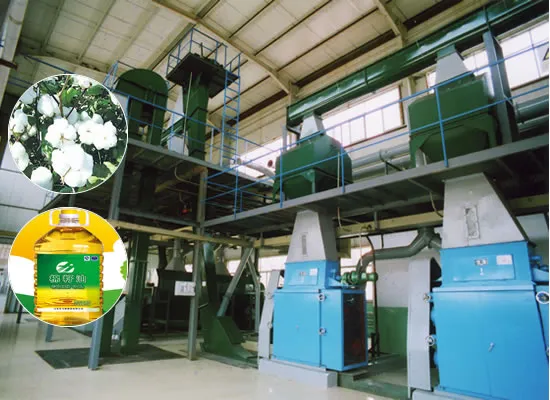
Cottonseed Oil Refining Process | Penguin Group - ISO & HACCP Compliant Solutions Explore the full cottonseed oil refining process—covering de-gumming, degumming, and decolorization—with technical insights on physical vs. chemical methods, temperature control’s impact on oxidative stability, and adsorbent selection (activated carbon vs. diatomaceous earth). Learn how real-world plants optimize yield and quality, and why international certifications like ISO and HACCP are critical for export-oriented manufacturers. Trusted by global B2B clients, QIE Group delivers precision-engineered solutions for edible-grade cottonseed oil production. Learn More 2026/03/12
Penguin Group | Optimizing Cottonseed Oil Dehulling & Pressing Efficiency for B2B Processing Plants This technical guide explores key strategies for enhancing mechanical dehulling efficiency in cottonseed oil production lines. By precisely controlling raw material moisture content, adjusting equipment clearance, and selecting optimal screen mesh sizes, processors can significantly improve yield and reduce operational costs. The article also highlights the advantages of multi-stage screw pressing technology in increasing oil extraction rates and lowering energy consumption. Real-world troubleshooting tips and expert insights from QIE Group’s engineering team ensure practical value for B2B clients seeking reliable, high-performance cottonseed oil processing solutions. Learn More 2026/03/11
Corn Germ Oil Processing Guide | Penguin Group - Maximize Nutrient Retention This article provides a technical deep dive into critical control points in corn germ oil processing—pre-treatment, pressing, and refining—to maximize retention of valuable nutrients like vitamin E and plant sterols. By scientifically managing parameters such as degumming temperature, vacuum settings, and antioxidant addition timing, manufacturers can ensure superior nutritional quality. Includes standardized operation flowcharts, troubleshooting checklists, and references to global food safety standards. Ideal for R&D teams and production engineers seeking actionable guidance to enhance product value and competitiveness in functional oil markets. Learn how QIE Group’s precision processing methods set new benchmarks in nutrient preservation. Learn More 2026/03/10
Corn Germ Oil Production Line Solutions for Small-Medium Oil Mills | Penguin Group Discover the key technical criteria—capacity flexibility, space efficiency, automation level, and maintenance ease—that determine successful corn germ oil line integration in small and medium-sized oil plants. This article compares traditional fixed systems with modular designs using real-world examples (e.g., a cooperative scaling from 3 to 20 tons/day), demonstrating how modular solutions reduce labor dependency, improve operational stability, and help startups avoid costly over-investment. Ideal for decision-makers evaluating equipment fit for their current stage. Learn More 2026/03/07
Corn Germ Oil Production Line Solutions for Small & Medium Mills | Penguin Group This article explores the core technical adaptations that make corn germ oil production lines suitable for small and medium-sized oil mills, focusing on capacity flexibility, space-efficient installation, automation levels, and maintenance accessibility. By comparing traditional fixed equipment with modular designs, it guides decision-makers in startups and mid-scale facilities to select the best solution based on daily processing volume, raw material characteristics, and budget constraints. Real-world case studies and FAQs enhance credibility while demonstrating how modular systems reduce labor dependency, improve operational stability, and maximize ROI—key considerations for sustainable growth in edible oil production. Learn More 2026/03/06