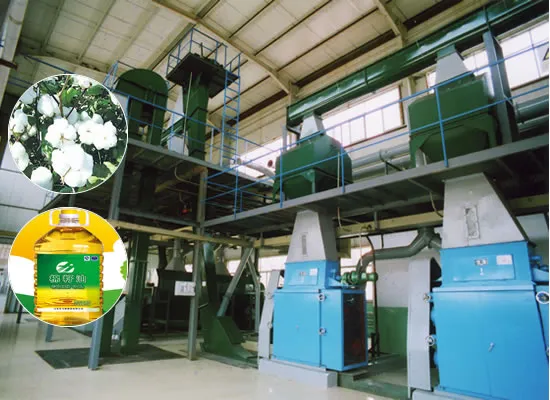
Cottonseed Oil Refining Process | Penguin Group - ISO & HACCP Compliant Solutions Explore the full cottonseed oil refining process—covering de-gumming, degumming, and decolorization—with technical insights on physical vs. chemical methods, temperature control’s impact on oxidative stability, and adsorbent selection (activated carbon vs. diatomaceous earth). Learn how real-world plants optimize yield and quality, and why international certifications like ISO and HACCP are critical for export-oriented manufacturers. Trusted by global B2B clients, QIE Group delivers precision-engineered solutions for edible-grade cottonseed oil production. Learn More 2026/03/12
Penguin Group | Optimizing Cottonseed Oil Dehulling & Pressing Efficiency for B2B Processing Plants This technical guide explores key strategies for enhancing mechanical dehulling efficiency in cottonseed oil production lines. By precisely controlling raw material moisture content, adjusting equipment clearance, and selecting optimal screen mesh sizes, processors can significantly improve yield and reduce operational costs. The article also highlights the advantages of multi-stage screw pressing technology in increasing oil extraction rates and lowering energy consumption. Real-world troubleshooting tips and expert insights from QIE Group’s engineering team ensure practical value for B2B clients seeking reliable, high-performance cottonseed oil processing solutions. Learn More 2026/03/11
Corn Germ Oil Production Line Solutions for Small & Medium Mills | Penguin Group This article explores the core technical adaptations that make corn germ oil production lines suitable for small and medium-sized oil mills, focusing on capacity flexibility, space-efficient installation, automation levels, and maintenance accessibility. By comparing traditional fixed equipment with modular designs, it guides decision-makers in startups and mid-scale facilities to select the best solution based on daily processing volume, raw material characteristics, and budget constraints. Real-world case studies and FAQs enhance credibility while demonstrating how modular systems reduce labor dependency, improve operational stability, and maximize ROI—key considerations for sustainable growth in edible oil production. Learn More 2026/03/06
5 Energy Waste Mistakes in Corn Germ Oil Production | Penguin Group This article uncovers five hidden energy inefficiencies in corn germ oil production that silently drive up operational costs. It explores proven strategies such as precise temperature control, high-efficiency pressing technology, thermal energy recovery systems, and modular production line design—backed by real-world case studies from the edible oil industry. Learn how to conduct a practical energy audit, evaluate equipment efficiency metrics, and implement cost-saving measures that boost both productivity and sustainability. Discover how enterprises like those using QIE Group’s optimized solutions have achieved measurable reductions in energy use while maintaining consistent product quality. Download our free energy efficiency checklist for immediate implementation. Learn More 2026/03/05
Choose the Right Corn Germ Oil Line for Small-Medium Plants | Efficiency & Space Optimization Guide This guide helps small and medium corn germ oil producers select an efficient, scalable, and space-optimized production line. It explores key factors such as capacity flexibility, installation space utilization, automation level, and maintenance ease—comparing modular vs. traditional equipment. Real-world case studies and FAQs provide actionable insights to avoid costly mistakes and boost profitability. Learn how to align your investment with daily processing needs, plant size, and budget. Learn More 2026/03/01
Corn Germ Oil Production Line for Small & Medium Oil Mills | Modular vs Fixed Equipment Guide Small and medium-sized oil mills face unique challenges in capacity planning, space constraints, and budget management. This article compares modular vs. fixed equipment designs—highlighting flexibility, installation speed, maintenance efficiency, and scalability. With real-world examples from cooperatives and regional processors, plus a clear configuration guide (5–50 tons/day), this analysis helps you determine if your facility can support an efficient corn germ oil line—even with limited technical expertise. Learn how to match your production needs without over-investing. Learn More 2026/02/28